
The Art of Africa is a casualty of colonial exploitation, surviving principally in the museums of other countries. ~ Nadine Gordimer
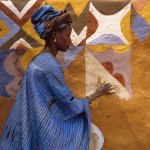
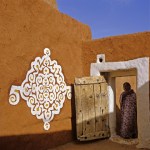
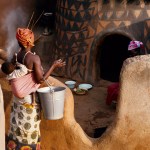
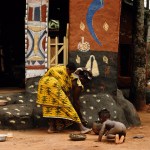
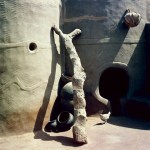
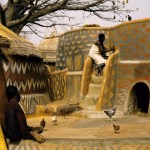
“My objective in this work is to document an extraordinary art form – vernacular art and architecture in West Africa – that is not transportable and therefore not seen in museums around the world. It is an attempt to capture the unseen Africa, a glimpse into the homes and into the spirit of very proud and dignified peoples. In much the same way as I photographed the art of Ndebele women, I have drawn on my personal affinity for the art itself, for methods, design and form, rather than the socio-anthropological or political realities of a people or continent in dilemma. These images portray a unique tradition of Africa, a celebration of an indigenous rural culture in which the women are the artists and the home her canvas.”
We have featured the amazing collages by Matthias Jung before, but could not resist sharing these new pieces in the series of surreal architecture with everyone.
Hanover and Berlin-based art duo Quintessenz recently completed a large-scale installation for the newly funded Paxos Contemporary Art Project, which is currently taking place on the island of Paxos in the Adriatic sea. Although designed to be appreciated and enjoyed in person, the images of their intervention created inside of a 400-year-old ruin are quickly becoming viral due to the work’s strong contrast against the historic setting.
Similar to the Paradis Perdus piece, their latest intervention in Greece used the architectural structure to emphasize the effect of their creation. Like digital abstract images somehow transferring into the real world, both these pieces employ color shades and different size layers to create depth and perspective illusion. Appearing bigger and smaller depending on the observer’s movement, they leave room for individual experiences of these interfaces between analog and digital worlds. Although exceptionally photogenic, the artists’ idea is to enjoy these works in person. “We hope that the visitors of our work leave their mobile phone cameras in their pockets for a moment and simply enjoy the light and the translation of the wind in the material,” Quintessenz explains.
A lightweight, yet dynamic structure designed by Beijing Institute of Architectural Design (BIAD), sits on the shores of Zhuhai island, in China’s Guangdong province. Blending naturally within the sea and sky with a pure and elegant form, the Zhuhai Opera House spreads along the coastal plane in the shape of two curved structures, occupying 59,000 sq-meters in total.
In a poetic manner, the layout of the site references the receding tides in the evening accompanied by the moon, with which Ma Long, deputy chief architect of BIAD, has managed to erect a new landmark for the island while maintaining a humble attitude towards nature. The two structures of the Zhuhai Opera House feature a 1,550-seat opera house and a 550 seat multi-function theater, and are connected with a 350-seat outdoor theater. entering the structure, visitors encounter an equally dramatic interior, where a play between sunlight, moonlight, and theater lights blend with each other across the translucent facade.
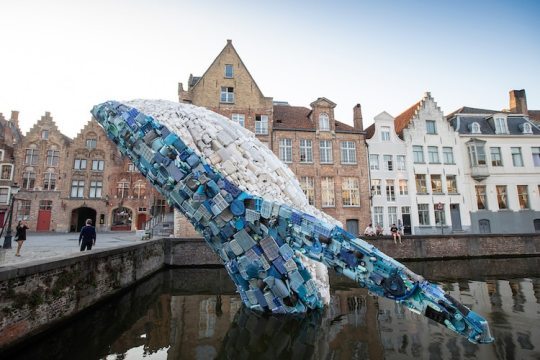
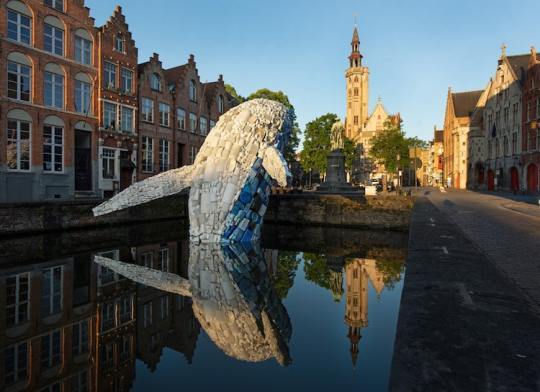
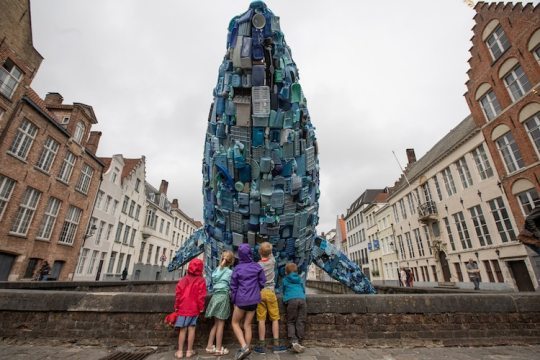
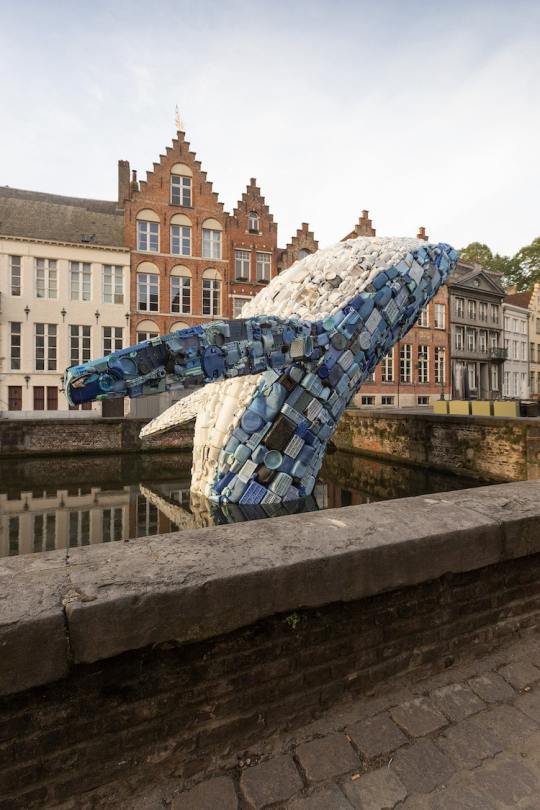
In response to the estimated 150 million tons of plastic trash currently in the ocean, Brooklyn-based architecture and design firm StudioKCA has created an incredible installation for the Bruges Triennial. Skyscraper (the Bruges Whale) is a 38-foot-tall whale fabricated from 5 tons of plastic waste fished from the Pacific and the Atlantic Oceans. As a stunning commentary on our current environmental state, the sculpture is a powerful reminder of what we are pumping into our oceans.